
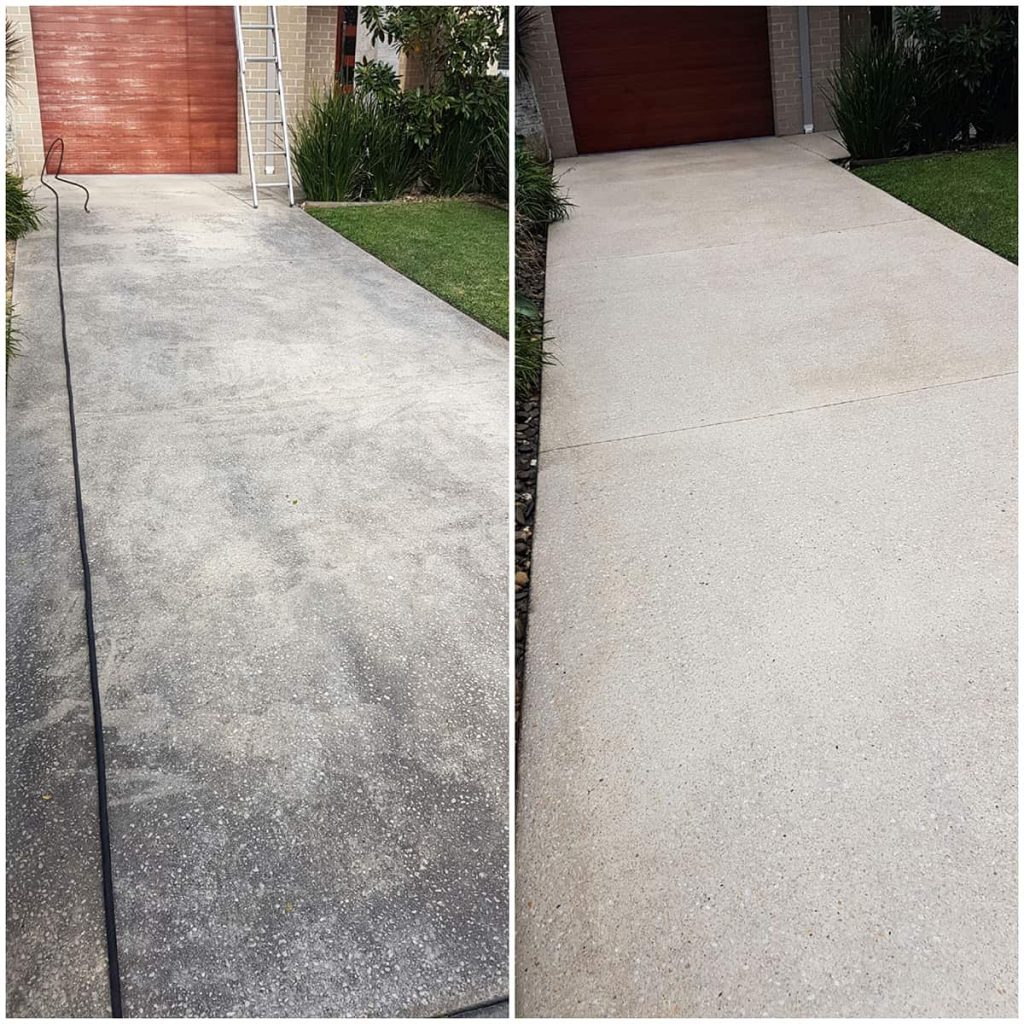
Soft washing a house means washing the walls with a cleaning solution and very little water pressure, roughly what comes out of a garden hose. The solution kills the mould and loosens the grime. The rinse carries it away. Nothing gets blasted off. On painted weatherboard and on render, that difference decides whether your walls come up clean or come up damaged, and it is the reason we never point a high pressure lance at either one.
House washing is its own division at BAM now, with a truck set up for it. Most of the calls are the same two surfaces: weatherboard gone chalky and grey down the south side, and render with black streaks running out from under the eaves.
Low pressure, and why the solution does the work
High pressure cleaning gets its result from force. Point a narrow jet at a surface and the water shears the dirt off. That is fine on a concrete driveway. On a painted wall the same jet shears off paint, and on render it can cut a line into the finish that no amount of washing afterwards will hide.
Soft washing trades force for time. We put on a solution that kills mould, lichen and the black growth living in the paint, let it sit, then rinse the wall down. The pressure at the surface is low enough that you could stand in front of it. The growth is dead by the time it comes off, and that is the part homeowners tend to miss. A jet of plain water knocks the visible black off and leaves the roots in the paint film. It is back within a few months, usually worse, because the wall is now slightly rougher than it was.
Weatherboard: chalking paint and mould in the laps
Exterior paint chalks as it ages. The binder in the film breaks down under Melbourne sun and the pigment is left sitting loose on the surface as a fine powder. Run your palm along a white weatherboard and you will bring some away on your hand. That chalk is most of what makes a house look tired even when the paint underneath is still sound.
A soft wash takes the chalk off and leaves the film that is left. High pressure takes the film as well, and once that is gone the timber underneath starts drinking water every time it rains.
Then there is the lap, the overlap where one board sits over the one below it. It holds water, it stays shaded, and mould grows along it in a black line. You cannot get a brush in there and you should not try to force water in with a lance. Water driven up under a board does not come back out. It goes into the wall cavity and sits. A soft wash solution wicks into the lap on its own and does the work while it dwells, which is the whole point of leaving it on.
Nail heads, splits in older boards and the gaps around window architraves are all places a pressure jet will find. Where boards are loose or the paint is already peeling off in sheets, that is a painting job first. We would rather say so at the quote than halfway through a wash.
Render: more porous than it looks
Render looks like a solid skin. It is not. Acrylic render and bagged brick both have an open surface, and mould does not simply sit on top of it, it grows down into it. That is why a rendered wall can be hosed off, look clean for a fortnight, and streak again.
Two things go wrong when render is high pressure cleaned. The first is gouging. Hold the lance a little close, or stop moving for a second, and you take out a shallow patch. Render goes on as one continuous coat, so a patch repair almost never blends, and you end up looking at it every time you pull into the driveway. The second problem is slower. Pressure opens the surface up, and a rougher, more open render collects more dirt and holds more water than it did before. The wall gets dirty faster from then on.
Textured and roll on renders are the worst for both. All the surface relief that makes them look good is exactly what a jet strips off.
What actually happens on the day
The quote comes first, usually from photos, and it should say which surfaces are being washed and which are not. On site we prepare: windows and doors closed, outdoor furniture moved clear, garden beds and lawn near the wall soaked with plain water before anything else goes on. Wet soil dilutes any run off before it reaches roots.
The solution goes on the wall at low pressure, worked from the bottom up so nothing runs down over dry render and leaves a clean stripe. Then it sits. Dwell time depends on how heavy the growth is and how warm the day is; on a cool grey morning it takes longer than it does in February. The rinse runs top down at the same low pressure until the water coming off the wall runs clear.
Last is the walk around. Anything that needs a second pass gets one while the gear is still out, which is a lot easier than coming back.
Where soft washing stops being the answer
Washing removes what is on and in the surface. It does not fix the surface. Paint that has already failed will still be failing after the wash, just cleaner. Rust bleed from a fixing, cracks in render, and efflorescence pushing salt out through a brick wall are all separate problems, and washing does not touch them. If your render is cracked or the paint is lifting, get the wash done before the trade turns up rather than instead of them; nobody wants to paint over mould.
The other thing to plan for is the windows. Wall washing puts solution and grit on the glass, so windows are done after the walls, not before. Same goes for gutters. If the gutters are due, clear them first so the debris and the black water in them are not still coming out over a freshly washed wall.
If your weatherboard or render needs doing, send through a couple of photos of the worst side of the house and we will quote it. Start with our house washing Melbourne page for what a full exterior wash covers, or call us on 03 8682 8767 and we will tell you over the phone whether it is a wash or a paint job.