
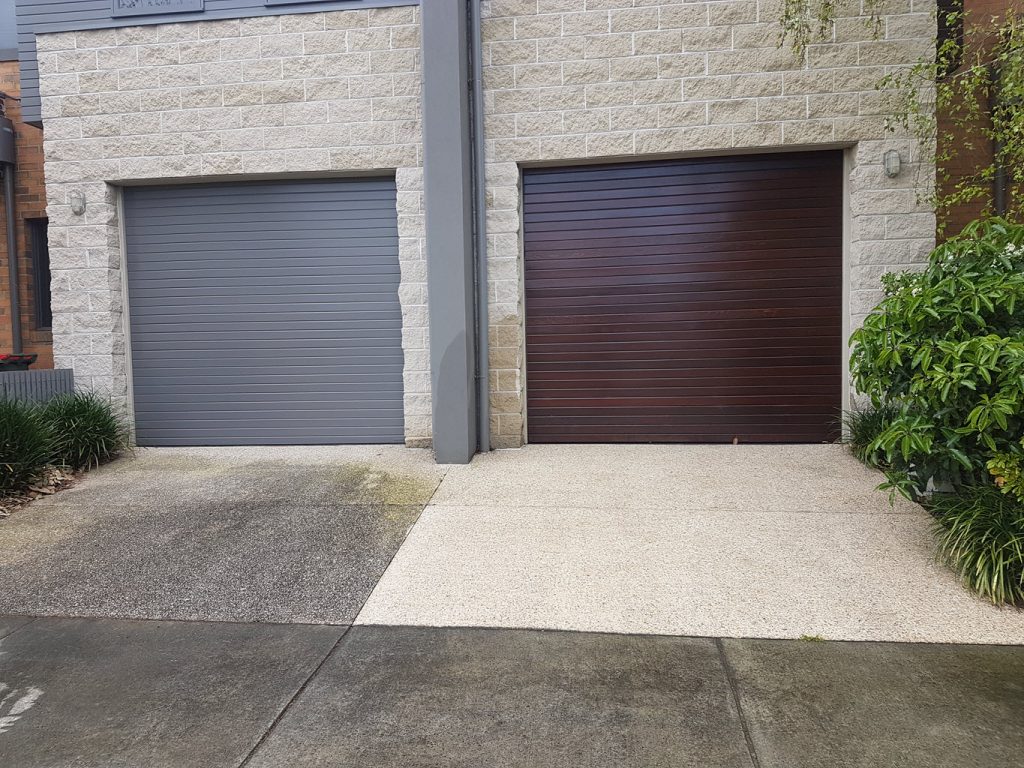
Nobody can give you a real figure for the cost to pressure wash a house exterior over the phone without knowing what they are looking at. Two homes on the same street in Cheltenham can be a morning apart in labour, and the difference is rarely the size of the house. It is the driveway, the state of the paint, and whether the truck can get within thirty metres of the tap.
What follows is what we look at when we price exterior cleaning, and why two houses of a similar size end up with different costs.
What drives the cost to pressure wash a house exterior
Area is the starting point. We work in square metres, not rooms, so the driveway, the paths down both sides, the porch, the alfresco slab and the pool surround all get measured before anything else. A long driveway on a battleaxe block can be more square metres of hard surface than the entire footprint of the house. That is usually where the hours go.
After area, it is the surface type, how badly it is stained, how hard it is to reach, and whether some of what you want cleaned should not be pressure washed at all.
Surface type sets the method
Plain broom finished concrete is the easy one. It is dense, it takes pressure well, and a surface cleaner attachment runs across it evenly.
Exposed aggregate is slower. The stones sit proud and the cement matrix between them is soft, so we drop the pressure and accept less coverage per pass. Push it and you wash the matrix out and loosen the stones, which is permanent damage that no amount of sealing hides.
Pavers and bluestone bring their own problem: sand joints. Too much pressure and the sand blows out, the pavers move, and you have a re sanding job that was not in the original project. That type of damage is cheap to avoid and slow to put right. Tessellated tiles on an older verandah need care again, since the grout is often the only thing holding them flat.
Different materials, different settings, different amount of time on site. That is why a hundred square metres of concrete and a hundred square metres of pavers do not carry the same costs.
Stains that add hours
Grime that has just settled out of the air comes off with water and the right pressure. The stains that add real time to a job are the ones that have soaked in or grown in.
Oil and transmission drips in front of the garage need a degreaser put down first and left to work, sometimes twice, before pressure will touch them. Old oil that has been sitting in porous concrete for years often lightens rather than disappears, and we will tell you that up front rather than after.
Moss and lichen on the shaded side of a path are alive and rooted into the surface. They need treating rather than blasting, or they may be back by the next wet season. Rust from a steel planter, tannin from a gum and paint overspray are different types of stains again, and each needs its own approach.
Photos of the worst spots get you a far more accurate price than any description does.
Access, water and setup
Access is the variable most people forget. If we can park at the kerb and run hose from the front tap, setup is quick. If the back courtyard is only reachable through a side gate 900 millimetres wide, everything gets carried, and the hose runs are long enough that the machine loses pressure at the wand.
Steep driveways, a second storey balcony, no external tap at the rear, low water pressure on the property, a locked body corporate gate, all of it adds time. So does anything we have to protect or move: pot plants, outdoor furniture, a car that has to stay in the carport.
Tell us about these when you ask for a price. A surprise on the day may turn a fixed quote into a variation, and we would rather quote it right the first time.
Your walls are not pressure washed at all
This is the biggest misunderstanding in the whole trade. Render, weatherboard, brick with painted joints and any cladding holding a coat of paint do not get high pressure. Pressure lifts paint, drives water in behind boards and gouges soft render, and the mould in the paint survives it anyway. Most of that damage is invisible on the day and expensive later.
Walls get house washing instead: low pressure, a cleaning solution left to dwell, then a rinse. It reads as a gentler job so people expect it to be cheaper, and often it is not, because the solution costs money and the wall has to be wet down, treated, left, and rinsed properly at every lap and window frame.
So when you ask about the price for the whole property, we are usually quoting two methods on one visit. Hard surfaces get the machine. Walls get the soft wash. Most houses need both, and doing them in the same trip is cheaper than two separate mobilisations.
Where the roof and gutters fit
A roof is a separate conversation and it changes the running order of everything else. There is no point cleaning a driveway on Monday if the roof and the gutters are being done on Tuesday, because everything that comes off the roof lands on what you just cleaned.
Roofs are soft washed, never high pressure washed, for the same reason walls are. High pressure forces water up under the tiles and strips the coating off older concrete tiles, and that damage is not repairable. If your roof needs doing, say so when you ask about the driveway, and we will sequence it so nothing gets cleaned twice.
What we need to quote it properly
- How many storeys, and whether there is a balcony or a second level path.
- Rough dimensions of the driveway and paths, in metres if you can pace them out.
- What the hard surfaces are made from: concrete, aggregate, pavers, bluestone, tiles.
- Photos of any oil, moss or discolouration you want gone.
- Whether the walls, roof or gutters are part of it.
- Where the nearest tap and parking are, and any gate we need a key for.
Most quotes get done off photos without anyone coming out. Any professional operator should be able to price a straightforward driveway that way. Bigger jobs and commercial sites we look at in person, usually the same week.
Frequently asked questions
How do pressure washing jobs get quoted in Australia?
Most operators price on area for flat work and on estimated hours for anything fiddly, then adjust for access and staining. Some quote a day rate for large sites. What matters is whether the quote is fixed or an estimate that may move, so ask which one you are being given.
How much does it cost to run a pressure washer for an hour?
Water and fuel are a small part of a professional job. What you are paying for is the machine, the chemicals, the insurance, and someone who knows which setting will not wreck your aggregate. A hire unit does not put out the power a professional machine does either, which is why a weekend with one feels cheap and often turns into a repair.
Do you charge more for the second storey?
Anything above ground level needs work at heights gear and takes longer to set up and move, so yes, height affects the price. Our crews are work at heights certified and we carry public liability insurance, which is worth checking before anyone climbs on your property.
Will the concrete come back white?
It will come back the colour it is under the dirt, which on a twenty year old driveway is not white. We would rather set that expectation now than have you disappointed on the day.
Send us photos of the driveway, the paths and any walls you want looked at, and we will price it before we book anything in. Quotes are free and given before any work starts. Call 03 8682 8767 or contact us to talk it through, and read what is involved in pressure washing Melbourne homes if you want the method in more detail.