
Short answer: no, not at the pressure a proper machine runs. People ask us most weeks whether they can pressure wash a weatherboard house, usually after a summer of dust or a winter of green film down the shaded side. The wall does need cleaning. High pressure is the wrong way to get it done, and the damage it causes does not always show up on the day.
What happens when you pressure wash a weatherboard house
Paint goes first. Exterior paint on an older Melbourne home has been through twenty summers by now, and the film has gone brittle and chalky well before it looks bad from the footpath. Put a pressure wand near it and it comes off in strips. It does not stop neatly where the failed paint ends either, so you finish with bare timber next to sound paint and a sand and repaint job instead of a wash.
Then there is the water that gets in behind. Weatherboards are lapped: each board sits over the one below it so rain running down the wall sheds off the outside. That join was never meant to hold back water fired upward at pressure. Aim a wand under a lap and the water goes straight through, onto the sarking and the framing. It sits in there. Nobody knows about it until a skirting swells or a room starts to smell.
On any board where the paint has already given up, high pressure also raises the grain. The soft spring wood erodes faster than the hard grain beside it, so the surface comes up furred. From then on that timber holds dirt and takes paint unevenly, and no amount of washing fixes it.
High pressure does not kill the mould
This is the part homeowners find surprising. That grey and green film down the south side of the house is mould and algae, and it has grown into the paint film rather than sitting on top of it. Blasting takes off what you can see. What is left in the surface is still alive, and it comes back within a few months, often quicker than before because the wall is now rougher and holds more moisture. A clean wall for one season, a worse wall after it.
What we do instead
Weatherboard walls get soft washing. The pressure is low, close to what comes out of a garden hose, and a cleaning solution does the work instead of force. We wet the wall down, apply the solution, and leave it to sit long enough to break down the mould and the film of dirt and pollution bonded to the paint. Then it gets rinsed off from the top down.
Two things make it worth doing properly. The dwell time has to be right, because rinsing too early leaves live growth and rinsing too late lets the solution dry on the paint. And the rinse has to be thorough at the laps, around window frames and behind downpipes, which is where the dirt runs to and where a rushed job always shows a fortnight later.
Done this way the wall stays clean for a lot longer, because you have killed the growth rather than knocked the top off it. Nothing goes behind the boards. The paint you have keeps whatever life it has left.
Where high pressure still belongs
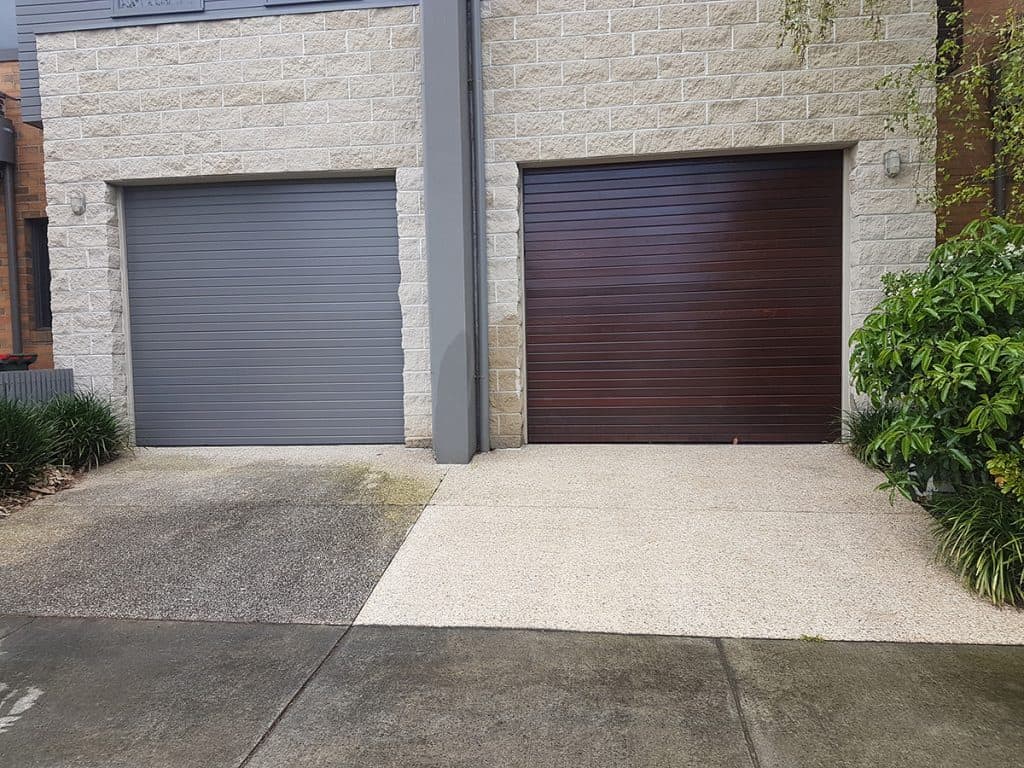
Plenty of the property is fine to hit hard. Driveways, paths, the concrete around the pool, brick paving, garage floors, retaining walls. Those surfaces are dense, they are not holding a coat of paint, and they need the mechanical energy to lift oil and moss out of the pores. We run a surface cleaner attachment across the flat areas so the finish comes up even instead of striped, and the pressure gets matched to whatever we are standing on. Bluestone and exposed aggregate do not take the same setting as plain concrete.
Most homes we quote need both on the same visit: pressure washing for the hard surfaces, a soft wash for the walls. It is the same crew and the same day, just different equipment coming off the truck for each part.
How to tell your weatherboards are due
Run your hand down a sunny wall. If it comes away powdery, the paint is chalking, which means the surface is porous and is holding dirt. Look at the south and east walls for green or black film, and at the boards under the gutter line for dark vertical streaks. Cobwebs and mud nests under the eaves are worth a look too, since they trap moisture against the timber.
Streaking straight down the wall usually points at the gutters rather than the wall. Water overflowing a blocked gutter carries silt and tannin down the weatherboards every time it rains, and washing the wall without sorting the gutter just resets the clock. If that is what yours looks like, book the gutter cleaning at the same time.
What we need to know to quote it
How many storeys, roughly how much wall there is, and what condition the paint is in. Photos of the worst wall tell us more than a description, particularly if the paint is failing already. Where paint is flaking off in sheets before we start, we will say so, because a wash will take more of it and the honest answer is that the wall needs a painter first.
Access matters as well. Tight side paths, a neighbour’s fence hard against the wall, garden beds full of established plants, all of it changes how we set up and how long the job runs.
If you want the walls done, send through a couple of photos and we will price it before anyone turns up. Our crews are work at heights certified and we carry public liability insurance, and we work seven days. Call 03 8682 8767 or read more about how we approach house washing across Melbourne.